🎂 Bakeware & Culinary Science Library • 10 In-Depth Bakeware Guides

Bakeware Guides & Pan Size Conversion Charts

Master baking science with our bakeware & convection guides. Learn when to choose glass vs metal pans, convert pan sizes accurately, calculate batter volumes, prevent thermal shock, and achieve perfectly baked cakes, pies, and breads.

Top Bakeware Pick Commercial-Grade Heavy Aluminized Steel

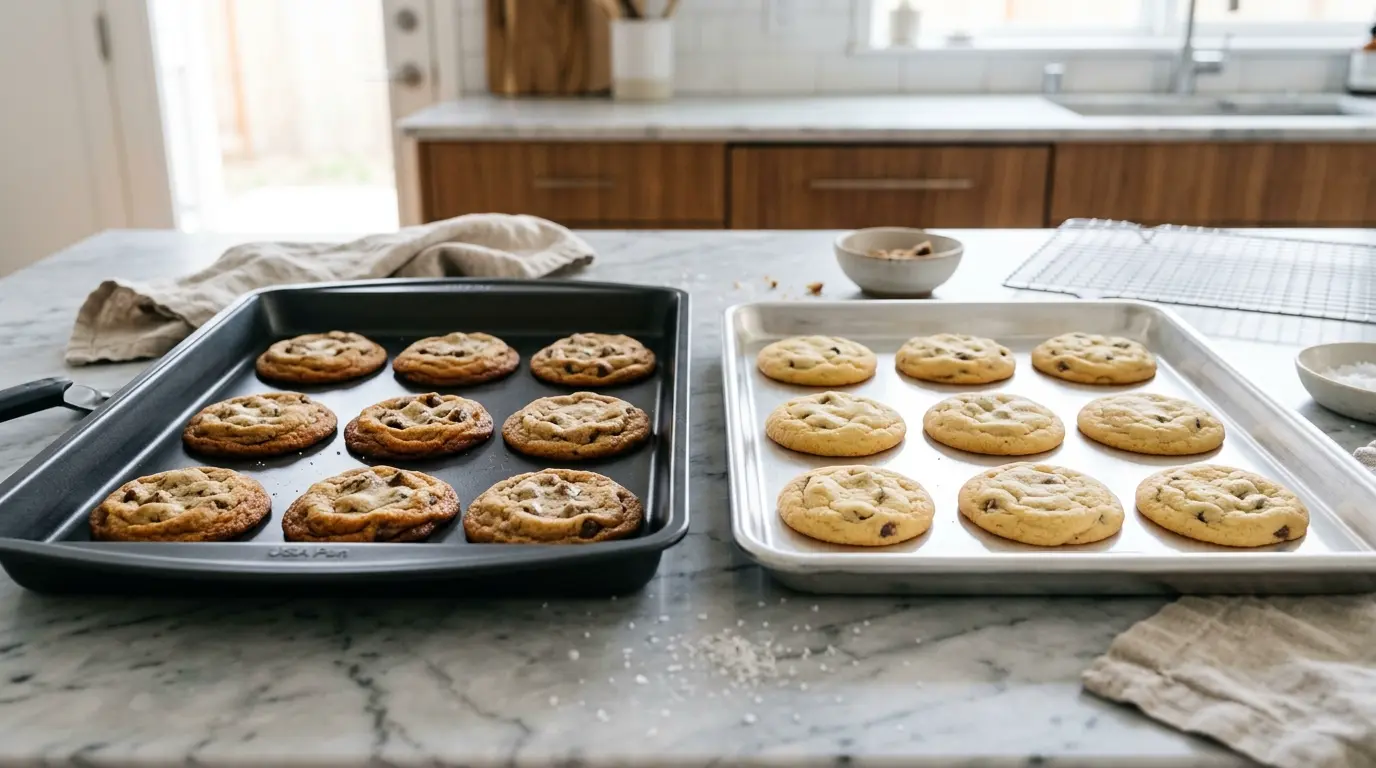
USA Pan Bakeware Aluminized Steel 9x13 Inch Rectangular Cake Pan

Corrugated fluted surface for even air circulation and Americoat non-stick silicone coating. Delivers sharp 90° corners, rapid heat conduction, and flawless cake and brownie release without hot spots.

View on Amazon Prices & availability verified
Affiliate Disclosure: When you purchase through links on our site, we may earn an affiliate commission at no extra cost to you.
Showing 11 of 11 Bakeware Guides
Filter:
Quick Reference Chart

Standard Bakeware Dimensions, Surface Area & Volume Ratios

Use this authority benchmark when scaling baking recipes across different pan geometries.

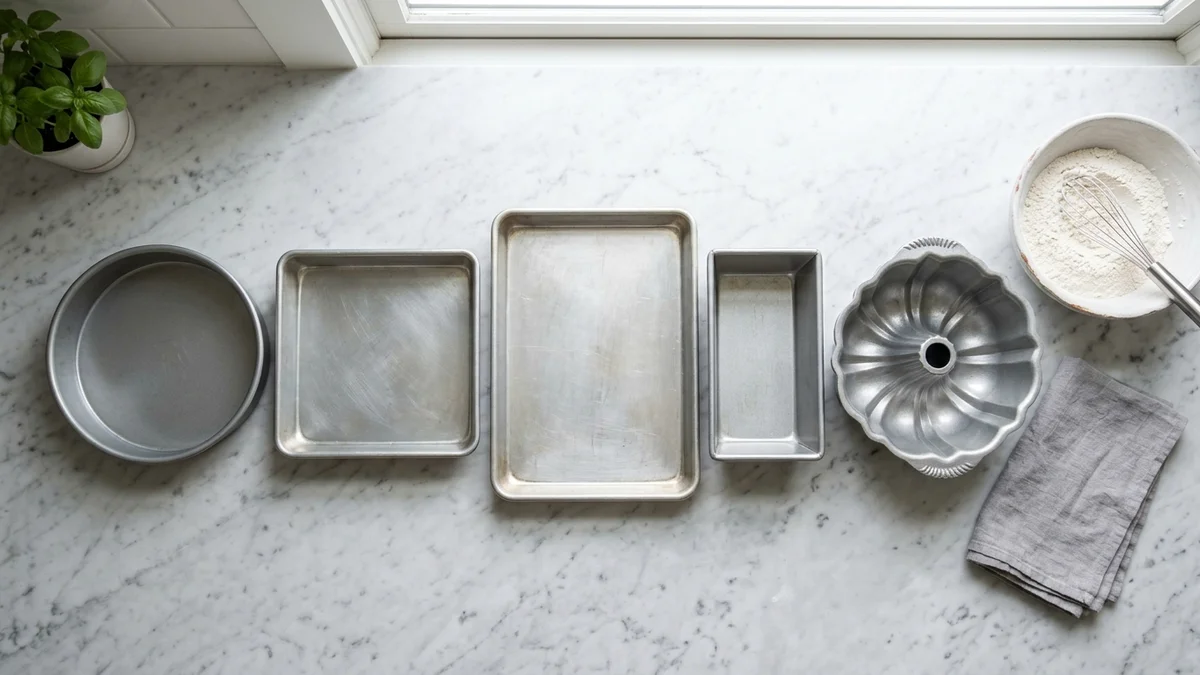
Pan Type & Nominal Size Dimensions (Inches) Surface Area Liquid Volume Ideal Material Common Substitution Equivalent
8-Inch Round Cake Pan 8" dia × 2" deep 50.3 sq in 6 cups (1.4 L) Light aluminized steel One 9-inch round (scale 0.79x)
9-Inch Round Cake Pan 9" dia × 2" deep 63.6 sq in 8 cups (1.9 L) Light aluminized steel One 8-inch square (nearly 1:1 match)
8-Inch Square Baking Pan 8" × 8" × 2" deep 64.0 sq in 8 cups (1.9 L) Metal or Pyrex (drop 25°F) One 9-inch round or 9-inch pie plate
9-Inch Square Baking Pan 9" × 9" × 2" deep 81.0 sq in 10 cups (2.4 L) Light aluminized steel Scale 8x8 recipe by 1.26x
9×13-Inch Rectangular Pan 13" × 9" × 2" deep 117.0 sq in 14-15 cups (3.5 L) Metal (cakes) / Glass (lasagna) Two 9-inch round pans (127 sq in, split 50/50)
Standard 1-lb Loaf Pan 8½" × 4½" × 2¾" 38.3 sq in 6 cups (1.4 L) Aluminized steel / Glass Requires 15% less batter than 9x5
Standard 1¼-lb Loaf Pan 9" × 5" × 2¾" 45.0 sq in 8 cups (1.9 L) Aluminized steel / Glass Requires 1.15x more batter than 8½x4½
Standard Bundt Pan 10" dia × 3½" fluted — 10-12 cups (2.8 L) Cast aluminum non-stick One 9x13 pan or two 8½x4½ loaf pans

Frequently Asked Questions About Bakeware & Pan Scaling

Evidence-based culinary answers to common bakeware substitutions and thermodynamics questions.

Why do you have to lower the oven temperature by 25°F when baking in glass pans? ⌄
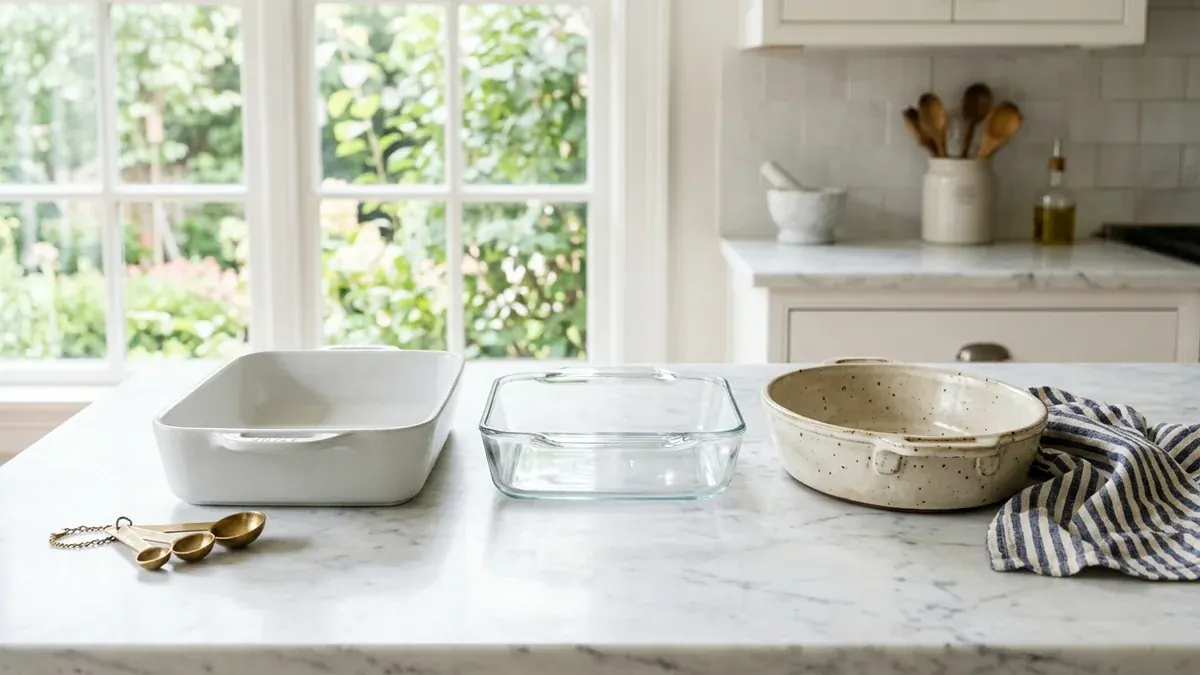
Glass is a thermal insulator that slowly absorbs radiant energy from oven heating coils and emits it directly into food. Once hot, it holds that heat far longer than thin metal. If baked at standard temperatures, the outer perimeter and bottom crust will scorch, brown aggressively, or turn tough before the liquid center has time to set. Lowering oven temp by 25°F (15°C) gives the core time to cook without burning the exterior.
Can I bake a 9x13-inch cake recipe in two 9-inch round pans? ⌄
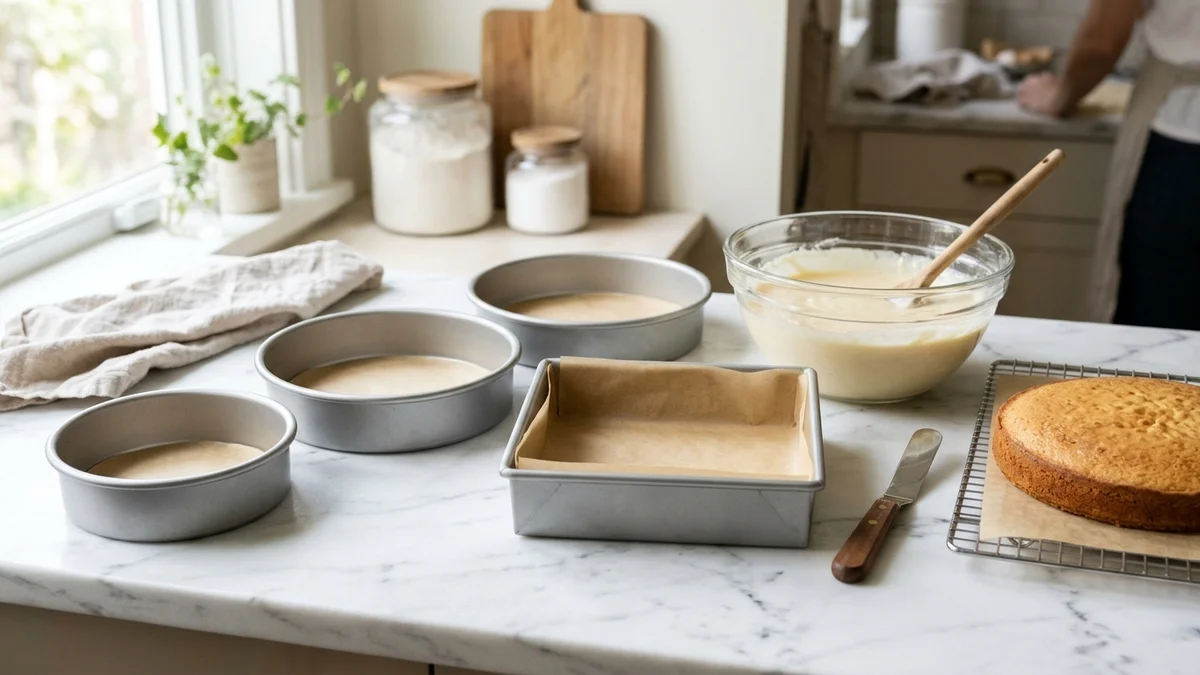
Yes, this is one of the most reliable 1:1 conversions in home baking! A standard 9x13-inch pan has a surface area of 117 square inches. Two 9-inch round cake pans have a combined surface area of 127 square inches (approx 8% difference). You can split a 9x13 batter evenly between two 9-inch rounds without adjusting ingredient amounts, and bake times remain within 2-4 minutes of the original recipe.
What is the difference between an 8½x4½-inch and a 9x5-inch loaf pan? ⌄
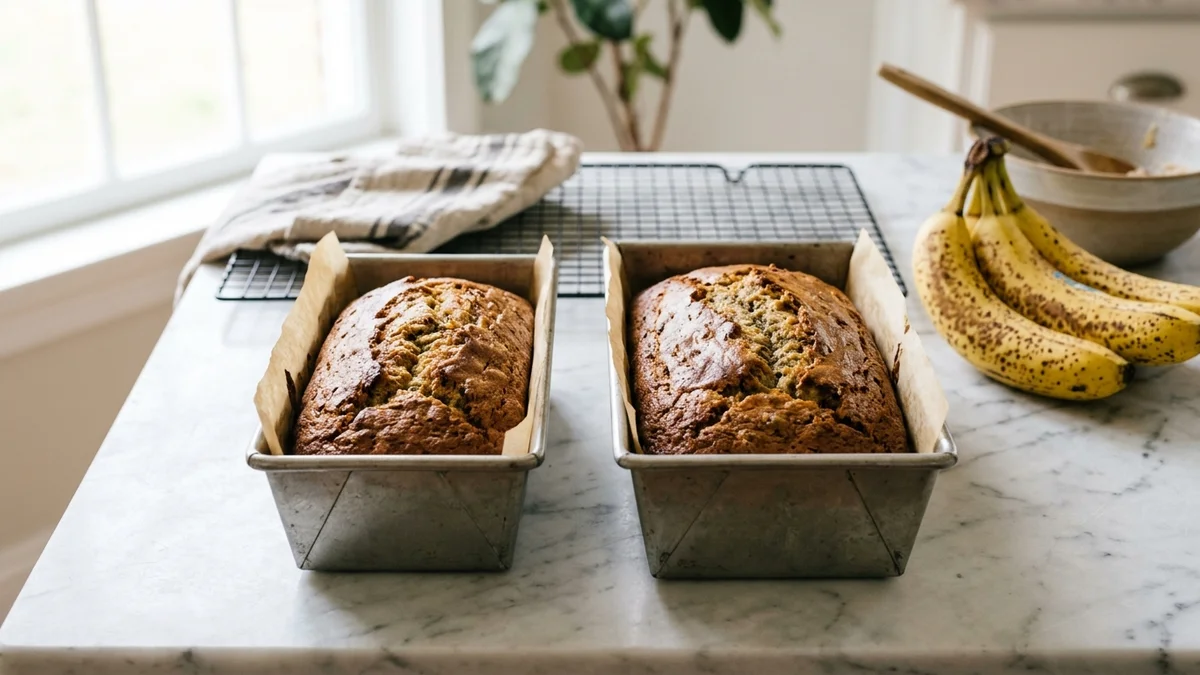
Although the dimensions look nearly identical, an 8½ x 4½-inch pan holds 6 cups of volume (1-lb loaf), while a 9 x 5-inch pan holds 8 cups of volume (1¼-lb loaf) — a 15% increase in base area. If you bake a 1-lb recipe in a 9 x 5 pan, your quick bread or banana bread will come out squat, flat, and pale. When using a 9 x 5 pan, increase the recipe by 1.15x.
How do you protect glass bakeware from thermal shock? ⌄
Thermal shock occurs when rapid temperature differentials produce unequal mechanical expansion across glass, causing sudden stress fracture. Never place hot glass directly onto granite or wet cloth. Always rest hot dishes onto a dry wooden board or silicone trivet. Never add cold liquids into a hot dish inside the oven, and allow frozen casseroles to thaw before baking.