
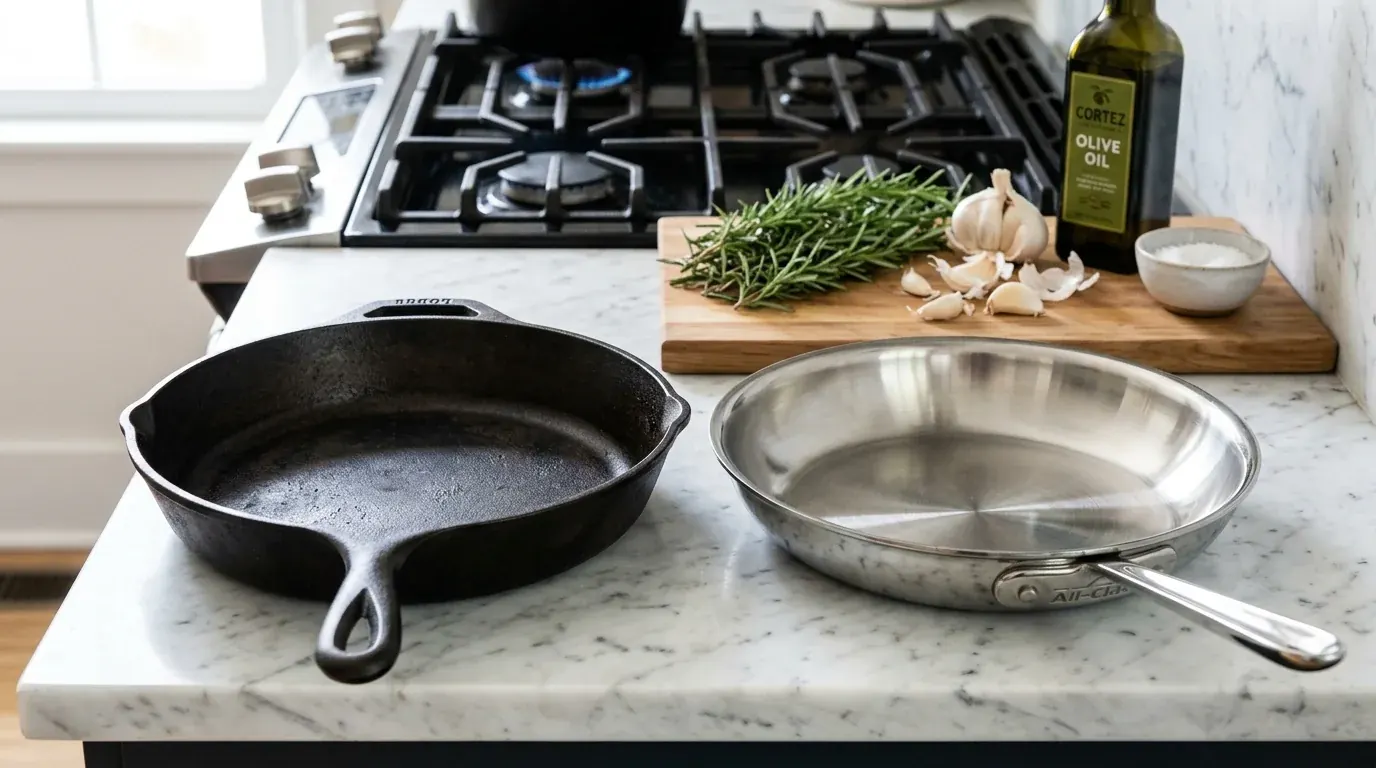
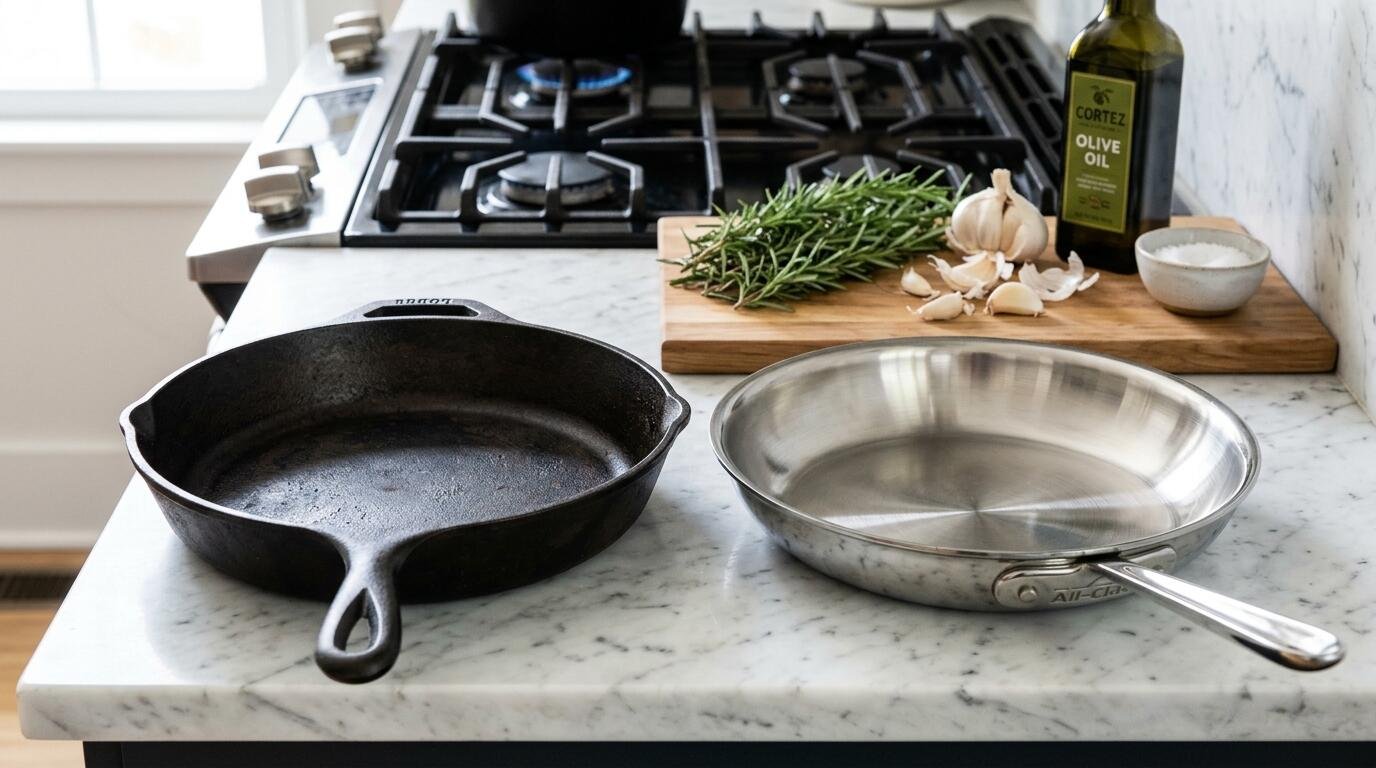
Two Essential Kitchen Workhorses: Left, a pre-seasoned 10-inch cast iron skillet built for maximum heat reservoir storage. Right, a multi-clad stainless steel skillet bonded with an aluminum core for rapid heat distribution and effortless pan sauce deglazing.
1. The Metallurgy: Heat Retention vs. Heat Responsiveness
To understand why these pans cook so differently, we have to look at how metals conduct and store thermal energy. Many cooks assume cast iron heats quickly and evenly—in reality, cast iron is a notoriously poor conductor of heat, but an unmatched reservoir of heat.
High Thermal Mass
Cast iron has a thermal conductivity rate of approximately 52 W/(m·K). It takes 5 to 8 minutes to preheat thoroughly, but once hot, its sheer dense mass stores huge amounts of BTUs. When a cold 16-ounce ribeye steak hits the skillet, the surface temperature barely dips.
Rapid Thermal Conductivity
Raw stainless steel is also a poor heat conductor, which is why quality pans sandwich a thick core of pure aluminum (237 W/(m·K)) between two layers of steel. It responds in seconds when you adjust the flame, virtually eliminating hot spots and giving you surgical heat control.
2. Side-by-Side Comparison Matrix
Direct comparison across 9 critical culinary factors
| Culinary Feature | Cast Iron Skillet | Tri-Ply Stainless Steel |
|---|---|---|
| Preheat Time | Slow (5 - 8 mins) | Fast (2 - 3 mins) |
| Heat Retention | Exceptional (Holds heat for 20+ mins) | Moderate (Cools quickly off heat) |
| Heat Responsiveness | Slow to drop when flame reduced | Immediate (Precise flame response) |
| Acidic Foods (Tomato/Wine) | ⚠️ Reactive (Strips seasoning & leaches iron) | ✓ 100% Non-Reactive (Ideal for sauces) |
| Deglazing Fond (Pan Sauces) | Fair (Dark surface hides fond color) | ✓ Best in Class (Clear visibility of fond) |
| Average Weight (10-inch) | Heavy (5.0 - 5.5 lbs) | Light to Medium (2.3 - 2.8 lbs) |
| Dishwasher Safe | ✕ Never (Causes severe rust) | ✓ Yes (Completely safe) |
| Oven Safe Max Temp | 650°F+ (Campfire & Broiler proof) | 500°F - 600°F (Handle dependent) |
| Price Range | $20 - $45 (Budget-friendly) | $60 - $160 (Higher initial cost) |
How to Make Stainless Steel 100% Non-Stick: The Leidenfrost Effect
The #1 complaint home cooks have about stainless steel is food sticking. You can prevent 100% of sticking by exploiting culinary physics before a drop of oil hits the metal:
Water Evaporates
If water splatters and dissolves into steam immediately, the pan is under-heated. Adding food now causes micro-pores to grip the protein, leading to tearing.
The Dancing Bead
At approximately 380°F, water droplets instantly form a single glossy sphere that glides across the metal like a marble on glass without hissing.
Add Oil & Cook
Wipe away the water bead, add your cooking oil, swirl until shimmering, and drop in your protein. Eggs, fish, and chicken will glide completely friction-free.
3. When Cast Iron Wins: Unrivaled Searing & Roasting
Cast iron shines brightest whenever you want prolonged, unwavering heat that does not flinch when loaded with cold proteins. The natural oil polymer layer built up through seasoning produces a semi-slick surface that improves the longer you use it.
- Steaks & Chops: The heavyweight pan produces deep mahogany crusts and rendered fat caps without overcooking interior meat.
- Smash Burgers: You can apply maximum downward force with a burger press without denting or warping the pan.
- Baking & Cornbread: Preheating cast iron in the oven before pouring batter yields golden, crispy outer crusts that no cake tin can match.
- Campfire & Open Flame: Pure cast iron has no rivets, plastic wraps, or bonded glue layers, making it indestructible over glowing coals.
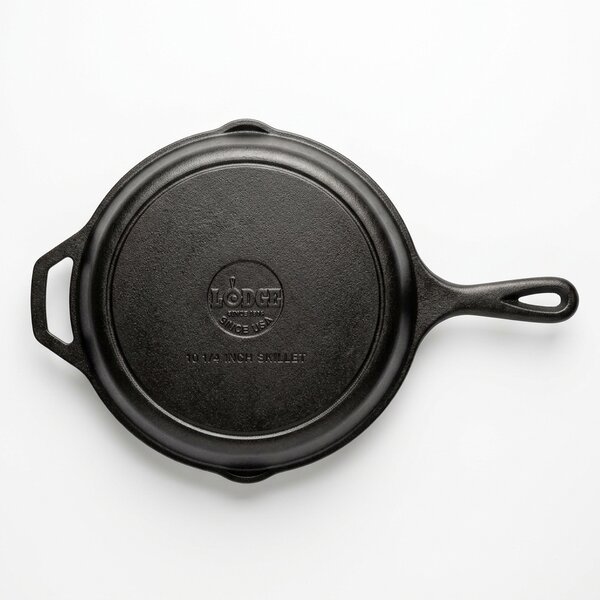
Lodge Pre-Seasoned Cast Iron Skillet (10.25-Inch)
Made in South Pittsburg, Tennessee. Pre-seasoned with 100% natural vegetable oil, dual pouring spouts, assist handle, and oven safe past 650°F.
4. When Stainless Steel Wins: Versatility & Pan Sauces
Stainless steel is the undisputed king of restaurant kitchen line cooking. Its bright interior allows you to track the exact golden browning of butter, onions, and meat drippings without burning.
- Fond & Deglazing: Browning chicken breasts in stainless steel leaves caramelized proteins (fond) on the bottom. Pouring in white wine, shallots, and stock effortlessly dissolves the fond into a silky pan sauce.
- Acidic Reductions: Simmering marinara, lemon caper piccata, or balsamic glazes in stainless steel is 100% inert and will never degrade your pan.
- Delicate Searing & Sautéing: Tossing stir-fry vegetables, searing scallops, or flipping tender salmon fillets is effortless thanks to lightweight ergonomic handles.
- Effortless Maintenance: No seasoning routines required. Scorched food wipes clean with vinegar or powdered mineral cleaners.
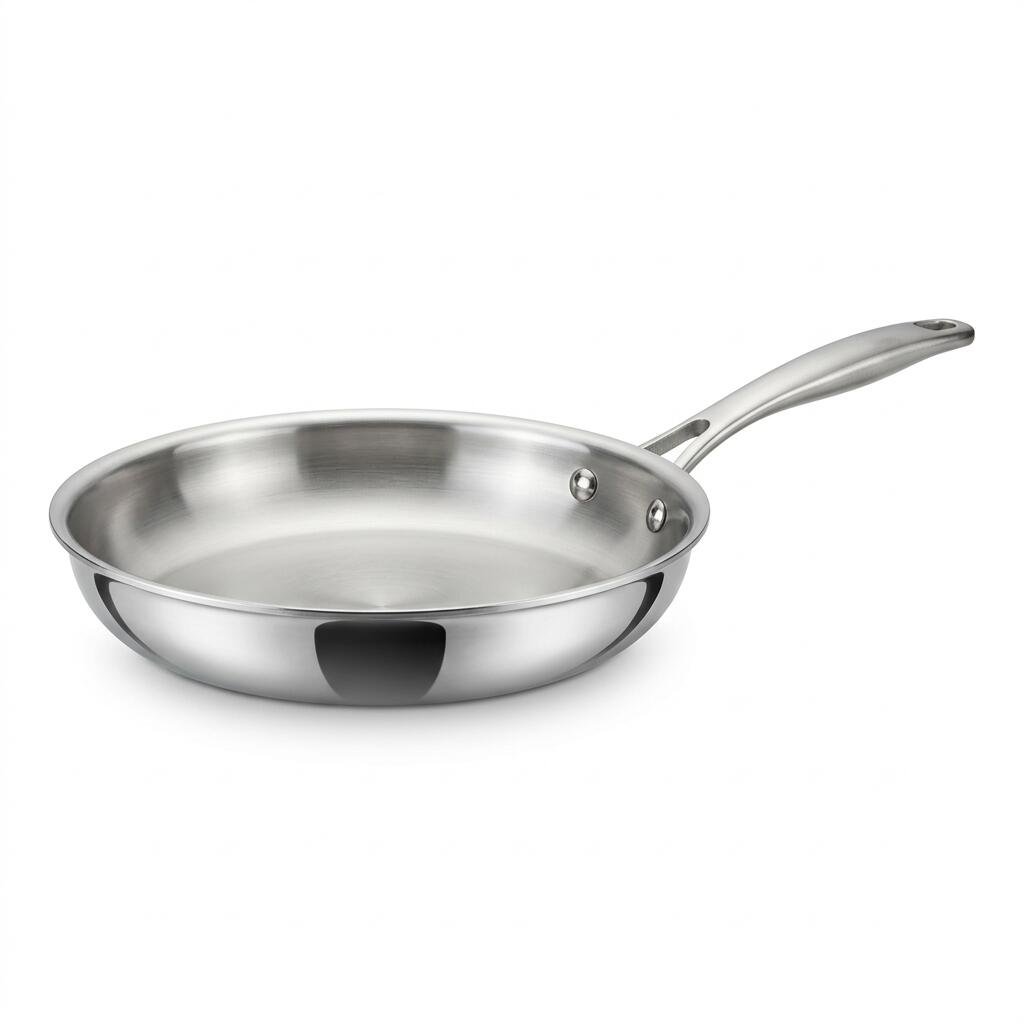
All-Clad D3 3-Ply Stainless Steel Fry Pan (10-Inch)
Handcrafted in Canonsburg, Pennsylvania with bonded tri-ply construction, heavy-gauge aluminum core, flared drip-free rims, and oven safe to 600°F.
5. Cleaning & Maintenance: Myths vs. Reality
One of the greatest points of hesitation for home cooks is upkeep. Here is the realistic breakdown of how to care for each pan without ruining your cookware:
- Yes, you can use mild dish soap! Modern soaps do not contain harsh lye; gentle dish soap will not strip polymerized seasoning.
- Never soak in the sink or leave air drying—wipe completely dry with a towel immediately.
- Rub a micro-thin drop of high-smoke-point oil (flaxseed, canola, or grapeseed) across the warm pan after washing.
- Dishwasher safe, but a quick hand scrub with hot water and dish soap keeps the mirror finish intact.
- To prevent sticking: use the Leidenfrost effect (preheat the pan until a droplet of water beads and dances like mercury before adding oil).
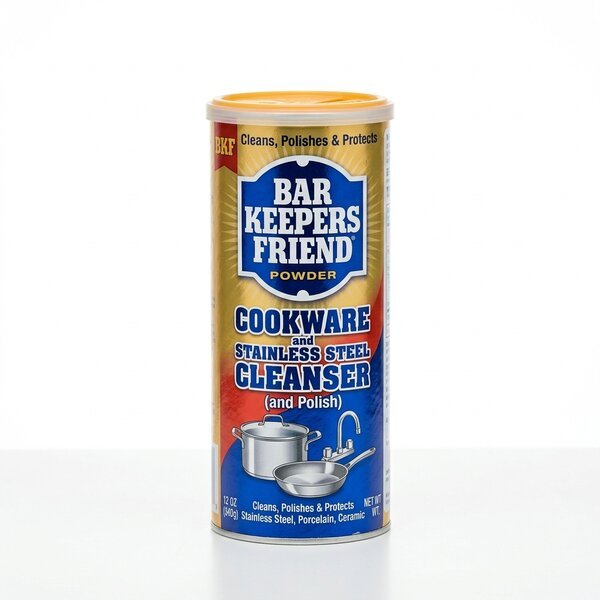
- For rainbow oxidation marks or scorched residue, a shake of Bar Keepers Friend restores the factory sheen in 30 seconds.
Popular cookware on Amazon
Sponsored — as an Amazon Associate we earn from qualifying purchases.
Frequently Asked Questions
Click any question below to expand the culinary answer
Which pan is healthier and truly non-toxic? ▼
Both are remarkably safe, non-toxic alternatives to traditional chemical Teflon non-stick pans. Tri-ply 18/10 stainless steel is completely chemically inert and will not leach anything into your diet. Cast iron is naturally seasoned with polymerized cooking oil and can contribute trace dietary iron to your meals, which is beneficial for individuals with iron deficiency.
Can I use both pans on modern induction cooktops? ▼
Yes. Cast iron is magnetic ferrous iron, making it highly effective on induction stoves. Most premium tri-ply stainless steel pans (like All-Clad and Tramontina) use magnetic 400-series stainless on their exterior base layer specifically for seamless induction compatibility.
Do eggs always stick to stainless steel pans? ▼
Not if used correctly! Eggs stick when placed in a cold pan or under-heated oil. Preheat the stainless pan over medium-low heat until the water droplet test passes, melt a pat of butter to coat the surface, and crack your eggs. A well-seasoned cast iron skillet is naturally slicker for eggs with less technique required.
If I can only buy one skillet, which should I get first? ▼
If you cook mostly tomato sauces, stir-fries, and delicate chicken with pan sauces, purchase a 10-inch or 12-inch Tri-Ply Stainless Steel Skillet first. If you cook lots of ribeyes, smash burgers, cornbread, and want an indestructible pan under $30, start with a 10.25-inch Lodge Cast Iron Skillet.