
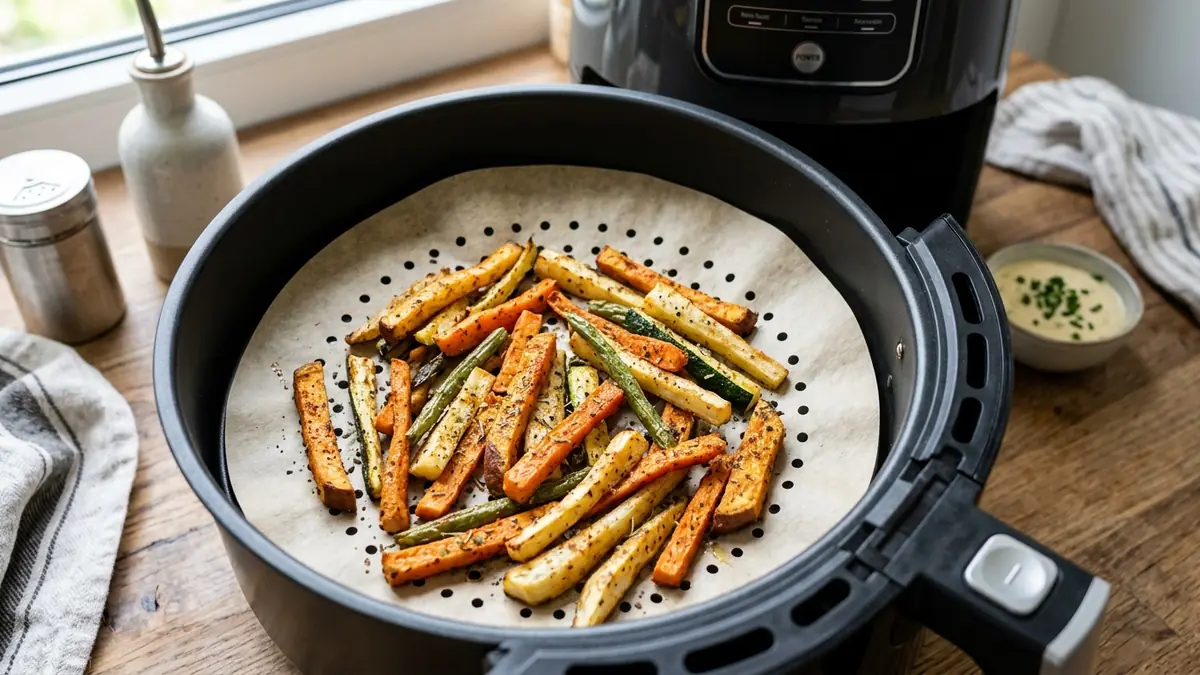
1. The #1 Fire Hazard: Preheating & Fan Suction Physics
Unlike a conventional wall oven that relies on natural radiant heat, an air fryer is a concentrated cyclonic convection chamber. It pairs a high-wattage heating coil (which reaches surface temperatures between 700°F and 800°F) with a powerful fan spinning at 2,000 to 2,800 RPM directly overhead.
🚨 Why Empty Parchment Paper Causes Instant House Fires
Standard 8-inch parchment sheets weigh less than 4 grams. When you turn on an air fryer without food, powerful intake updrafts suck the lightweight sheet upward in under 3 seconds. The paper contacts the glowing 800°F heating element, igniting into open flames and blowing burning embers into the grease-coated exhaust chamber.
Every major appliance brand—including Ninja, Cosori, Instant Brands, and Philips—explicitly forbids placing parchment paper into the basket during preheat cycles. Review our scientific guide on do you need to preheat an air fryer. Always allow the chamber to preheat completely empty, then insert the paper liner, immediately anchor it with food, and slide the drawer shut.
| Air Fryer Capacity | Convection Fan Speed | Minimum Food Weight | Safe Food Examples |
|---|---|---|---|
| Compact (2–3 Quarts) | 1,800 – 2,000 RPM | 150g (5.3 oz) | 3 chicken tenders, 1 large pork chop |
| Standard Basket (4–6 Quarts) | 2,200 – 2,400 RPM | 200g (7.0 oz) | 6 wings, 2 burger patties, full potato portion |
| XL / Dual Basket (7–10 Quarts) | 2,500+ RPM | 280g (10.0 oz) | Whole chicken breasts, loaded fries batch |
Never use parchment paper when cooking lightweight items such as tortilla chips, kale chips, or single slices of bread. Strong convection drafts will flip the paper over the light snack and suck both into the coil. For lightweight snacks, use the bare crisper plate or mold aluminum foil in an air fryer.
2. Perforated vs. Solid Parchment Paper: Crispiness & Airflow
The secret to air fryer crispiness is rapid 360-degree convection airflow. The fan drives superheated air down through the food and up through the bottom crisper plate grates, rapidly stripping surface moisture with only a teaspoon of cooking oil.
✨ Perforated Air Fryer Liners
Manufactured with dozens of evenly spaced 0.2-inch laser-cut holes. Hot air passes freely through the bottom, allowing convective drafts to brown fries, chicken cutlets, and wings without needing to flip them constantly.
Crispiness Retention: 92% – 95%📄 Solid Parchment Rolls (Cut-to-Fit)
Standard rolls create an airtight barrier across the crisper plate. Rendered liquids and oil pool directly beneath the food, steaming the underside and resulting in pale, soggy bottoms unless manually turned halfway.
Crispiness Retention: 65% – 70% (Best for Cakes)Culinary Recommendation: Reserve solid unperforated sheets for delicate air fryer baking (cookies, scones, brownies) and fragile fish like salmon. For all crispy finger foods (fries, tenders, wings), always choose pre-punched perforated sheets.
3. Maximum Temperatures: Silicone vs. Quilon Coatings
Not all parchment paper is manufactured equally. High-grade kitchen parchment is treated with pure food-grade silicone, giving it hydrophobic (water-repelling) and lipophilic (grease-resistant) properties capable of withstanding intense thermal stress up to 450°F:
1. Silicone-Coated Parchment (Recommended)
Heat rated up to 420°F–450°F (215°C–232°C). Safe for 95% of all standard air fryer cooking programs including chicken, steak, and vegetables.
2. Quilon-Coated Parchment (Caution Above 400°F)
Chemically treated with chromium complexes. Only heat rated to 400°F (204°C). Above 400°F, quilon can degrade and release foul odors.
3. Wax Paper (EXTREME FIRE HAZARD)
Coated with petroleum paraffin wax that melts at only 140°F (60°C). Never put wax paper in an air fryer under any circumstance. Review our comparison on can you put wax paper in an air fryer.
4. Chemical Safety: PFAS, Bleach & FDA Food Contact Rules
According to standards enforced under FDA Food Contact Substances Regulations (21 CFR 176.170), quality unbleached parchment paper is 100% non-toxic, BPA-free, and PFAS-free:
Reputable brands (Reynolds, If You Care, Katbite) use natural wood pulp sealed with pure food-grade silicone (polysiloxane), free of fluorinated chemicals.
Silicone is an inorganic polymer synthesized from natural silica (sand). It contains zero microplastics, phthalates, or BPA, and does not off-gas harmful vapors below 450°F.
Unbleached brown parchment is Totally Chlorine-Free (TCF), retaining natural wood fibers without chlorine chemical baths. Both are safe, but brown paper is cleaner and eco-friendly.
5. Comparison: Parchment Paper vs. Wax Paper vs. Foil vs. Silicone
Review how parchment paper stacks up against all common kitchen liners across heat limits, crispiness, and safety:
| Material | Max Temp Rating | Airflow / Crispiness | Acidic Foods Safety | Fire Hazard Risk |
|---|---|---|---|---|
| Perforated Parchment | 428°F – 450°F | Excellent (Vents circulate air) | 100% Safe (Non-reactive) | Low (If weighed down) |
| Solid Parchment Roll | 428°F – 450°F | Moderate (Blocks bottom vents) | 100% Safe (Non-reactive) | Low (If weighed down) |
| Wax Paper | 140°F (Melts) | Terrible (Smokes & melts) | Toxic paraffin vapor | EXTREME (Instant Fire) |
| Aluminum Foil | 1,220°F | Moderate (Must be crimped) | Leaches into citrus & vinegar | Very Low (Molds to basket) |
| Silicone Liners | 450°F – 500°F | Good (Perforated mats) | 100% Safe (Dishwasher-safe) | Zero (Heavy enough to stay down) |
6. Food Master Guide: What Foods to Cook with Parchment vs. Bare Basket
Knowing whether your recipe benefits from parchment paper or suffers from reduced airflow is critical for kitchen success:
| Food Item | Best Cooking Method | Crispiness Score | Culinary Reason |
|---|---|---|---|
| Chicken Wings & Tenders | ✓ Perforated Parchment | 95% Crispiness | Fat drips through vents; stops skin welding to grates. |
| Skin-On Salmon & Cod | ✓ Perforated or Solid | 90% Crispiness | Delicate fish skin will not tear; easy removal with fish spatula. |
| Bacon Strips (4–6 slices) | ✓ Perforated Parchment | 90% Crispiness | Lets grease drain into drip pan while curbing white smoke blowouts. |
| French Fries & Tots | Bare Crisper Plate | 100% Crispiness | Needs maximum bottom air velocity to dehydrate external starches. |
| Cookies, Scones & Pastries | ✓ Solid Parchment Sheet | Gentle Bottom Bake | Prevents raw dough from drooping between grate bars before setting. |
| Reheating Pizza Slices | ✓ Perforated Parchment | 95% Crispiness | Catches melted cheese drips; keeps bottom crust blistered and crunchy. |
| Tortilla Chips & Kale Chips | ❌ NEVER USE PARCHMENT | FIRE HAZARD | Snacks weigh under 100g. Convection fan lifts paper into 800°F coil! |
7. Emergency Safety: What to Do If Parchment Paper Catches Fire
If parchment paper ever contacts the heating element and catches fire, executing this correct 4-step emergency sequence prevents property damage:
🚨 4-Step Fire Containment Sequence
- Step 1: IMMEDIATELY Pull the Electrical Plug: Unplug the cord from the wall outlet. This halts heating current and stops the high-speed fan that feeds oxygen into the flames.
- Step 2: DO NOT Open the Basket Drawer: Pulling the drawer out rushes fresh oxygen into the chamber, transforming a tiny ember flare into a dangerous kitchen cabinet fire. Keep it closed!
- Step 3: NEVER Throw Water into the Air Fryer: Air fryer baskets contain hot rendered animal fats. Water causes a violent steam explosion that spatters burning grease.
- Step 4: Let the Fire Starve of Oxygen: Because the cooking chamber is an enclosed metal box, keeping the drawer shut causes the fire to deplete its oxygen and extinguish within 20 seconds.
8. Air Fryer Liner Safety & Airflow Compatibility Calculator
Select your basket type, liner material, planned cooking temperature, and food weight below to verify safety and crispiness compatibility in real time:
9. Frequently Asked Questions (FAQ)
Can you put parchment paper in an air fryer? ▾
Yes, you can safely put parchment paper in an air fryer, but only when it is weighted down with food. Never put parchment paper in an air fryer during preheating or without enough food, as the rapid cyclonic convection fan will blow the lightweight paper directly into the glowing 800°F heating element, igniting an instant fire.
What is the #1 fire hazard when using parchment paper in an air fryer? ▾
The number one cause of air fryer fires is inserting a sheet of parchment paper into the basket while preheating without food. Because unweighted paper weighs less than 5 grams, the 2,000+ RPM convection fan sucks it upward in less than 3 seconds directly against the exposed heating coil, instantly igniting the paper into flames.
What is the difference between perforated and regular parchment paper? ▾
Perforated air fryer parchment paper features laser-cut holes that permit hot convection air to circulate 360 degrees through the basket floor, ensuring foods like fries and chicken wings crisp evenly. Regular solid parchment paper blocks airflow, trapping moisture beneath the food and creating soggy bottoms.
Can you use wax paper instead of parchment paper in an air fryer? ▾
No, never use wax paper in an air fryer. Wax paper is coated with paraffin wax that melts at only 130°F–140°F (54°C–60°C). Inside a 350°F+ air fryer, the wax coating liquefies, releases toxic chemical smoke, ruins your food, and poses an extreme flash-fire danger.
Can you preheat an air fryer with parchment paper inside? ▾
No. You must always preheat your air fryer empty. Placing parchment paper in an empty basket during preheating causes the high-speed fan draft to lift the paper straight into the heating element where it catches fire almost instantly.
Is parchment paper better than aluminum foil for air frying? ▾
Parchment paper is superior for delicate baking (cookies, pastries), sticky marinated proteins, and acidic foods (lemon salmon, tomato glazes) because it is non-stick and chemically non-reactive. Aluminum foil is better for catching heavy drippings and high-temp broiling, but it blocks airflow and leaches into acidic ingredients.