Chef Master Recipe USDA Temp Guide Updated for 2026

Crispy Air Fryer Salmon Recipe: Flaky, Tender & Golden Skin

Looking for restaurant-quality salmon with crackling golden edges and a melt-in-your-mouth tender center in under 10 minutes? The rapid hot convection air of an air fryer seals natural healthy omega-3 oils inside while caramelizing spices on the surface—all without stovetop oil splatter or a fishy kitchen aroma. Here is our complete recipe and food-science guide.

By OTAFC Editorial Team • Compatible with Ninja, Cosori & Instant Vortex Air Fryers
Reference Guide: Built from USDA thermal safety benchmarks, convection heat-transfer principles, and owner feedback (no in-house lab).
Affiliate Disclosure: As an Amazon Associate, we earn from qualifying purchases at no additional cost to you.
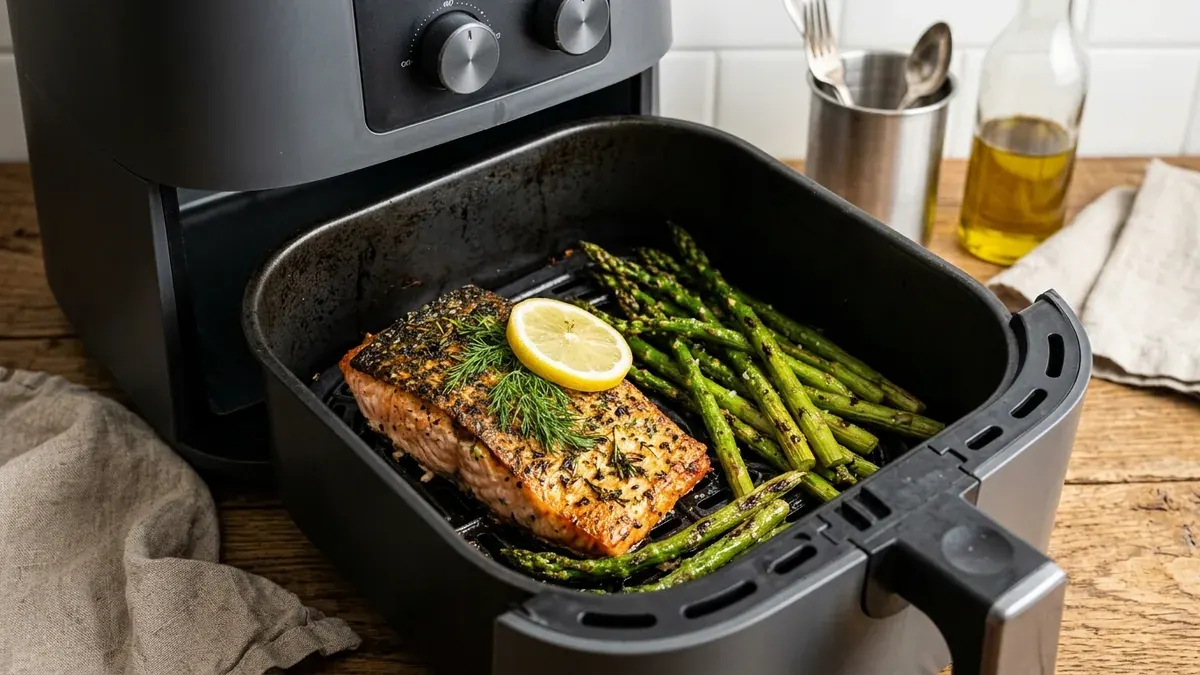
Crispy Golden Herb Air Fryer Salmon Fillets in Crisper Basket with Lemon
Two perfectly cooked crispy golden air fryer salmon fillets seasoned with smoked paprika and dill in a crisper basket, served with fresh lemon slices.
Prep Time 5 Mins Pat dry & rub
Cook Time 7–9 Mins At 400°F (204°C)
Target Temp 125°–130°F Buttery medium
Flipping None Cook skin-down

Quick Verdict: Why Air Frying Is The Ultimate Method For Salmon

Traditional pan-searing salmon splatters hot grease across your stovetop and leaves lingering fish aromas throughout your kitchen. Baking in a conventional oven requires 20 minutes of preheating and often leaves the surface soggy without searing.

An air fryer solves both issues simultaneously. The compact cooking cavity concentrates 400°F convection heat directly onto the salmon's surface within seconds. It creates a glistening, crisp-tender crust on top while circulating heat underneath to render the skin crackling and golden—all in just 8 minutes flat. Compare cooking benchmarks on our Air Fryer Cooking Times Chart.

Zero Pan Splatter Crispy Skin Without Flipping Locks In Natural Moisture
Master Recipe

Crispy Air Fryer Salmon Fillets

Buttery, flaky salmon with a mouthwatering seasoned crust and ultra-crispy skin. Ready in 13 minutes total.

Prep Time: 5 minutes
Cook Time: 8 minutes
Total Time: 13 minutes
Yield: 4 Servings (6 oz fillets)

Ingredients You Will Need

  • 4 center-cut salmon fillets (approx. 6 oz each, skin-on, ~1 inch thick)
  • 1 tbsp extra virgin olive oil (or avocado oil)
  • 1 tsp garlic powder
  • 1 tsp smoked paprika (for rich golden color & warmth)
  • 1/2 tsp kosher salt
  • 1/4 tsp coarse black pepper
  • 1/2 tsp onion powder
  • 1 fresh lemon (sliced into wedges for finishing)
  • 1 tbsp fresh dill or parsley, finely chopped (optional)
Essential Tools:
  • • Instant-read digital food thermometer
  • • Thin flexible stainless fish spatula (prevents tearing)
  • • Perforated silicone mat or parchment liners (optional)

Step-by-Step Execution Summary

  1. 1. Dry the Salmon: Thoroughly dry every fillet with paper towels. Dry skin crisps immediately; wet skin steams into rubber.
  2. 2. Oil & Season: Rub oil across the skin and flesh. Blend paprika, garlic powder, onion powder, salt, and pepper; pat firmly into the top of the fish.
  3. 3. Preheat to 400°F (204°C): Give the air fryer 3 minutes to reach full convection temperature.
  4. 4. Air Fry for 7–9 Mins: Place skin-down with 1 inch space. Cook without flipping until the internal temperature reaches 125°–130°F.
  5. 5. Rest 2 Minutes: Rest on a warm plate before squeezing fresh lemon juice over the top.

Estimated Nutrition (Per 6 oz Serving)

Calories 285 kcal
Protein 34g
Healthy Fats 15g
Net Carbs 0.5g

In-Depth Step-by-Step Cooking Technique

While air frying salmon is remarkably fast, understanding why each step matters ensures you get pristine culinary results every time. Here is the exact methodology followed by culinary testing kitchens:

Step 1: Bone Check & Paper Towel Drying

Run your fingers lightly along the center ridge of each fillet to detect any leftover pin bones. Use clean culinary tweezers to pull them in the direction of the grain. Next, take 2 dry paper towels and firmly press both the flesh and the skin. Any water left on the fish creates a micro-steam barrier when heat strikes, preventing the Maillard reaction (browning) and keeping the skin rubbery.

Step 2: The Binding Fat & Spice Application

Lightly coat the salmon with 1 tablespoon of extra virgin olive oil or avocado oil. Oil acts as both a flavor conductor and an adhesive for the seasoning rub. Smoked paprika lends a vibrant crimson-golden color, garlic powder creates savory depth, and freshly cracked black pepper provides aromatic punch. Press the seasoning into the fillet with the back of a spoon so the air fryer fan doesn’t blow the dry spices away. Check out our Cooking Oil Smoke Point Guide for optimal oil selections.

Step 3: Preheating the Grate

Never put raw salmon into a cold air fryer basket. Preheating the appliance for 3 minutes at 400°F ensures that the moment the skin touches the metal grate, the outer skin proteins immediately tighten and release fat. This prevents the skin from bonding to the grate holes and tearing during removal.

Step 4: Arranging With Proper Airflow Clearance

Air fryers rely on high-velocity circulating air currents. Leave at least 1 inch of empty clearance between each salmon fillet. If fillets touch, cold stagnant air pockets form between them, causing uneven cooking and mushy sides. For a standard 4 to 6-quart air fryer, cook 2 to 3 large fillets at a time.

Step 5: The Crucial 2-Minute Rest

When you take the salmon out of the 400°F air stream, the outer surface is significantly hotter than the core. Resting the fillets on a warm plate for 2 minutes allows carryover heat to gently raise the internal temperature by 3° to 5°F while muscle fibers relax, redistributing flavorful natural fats back into the center of the flakes.

Top-Rated Thermometer

ThermoPro Lightning Instant-Read Digital Meat & Fish Thermometer

Reads temperatures in 1 second with ±0.5°F accuracy. The single most important tool to hit 125°–130°F and prevent dry, chalky salmon.

View on Amazon

Air Fryer Salmon Time & Temperature Chart

Fillet thickness—not total weight—is the primary variable that determines cooking time. Convert any conventional oven recipe using our Oven to Air Fryer Calculator, or follow this authoritative reference table based on 400°F (204°C) convection air frying:

Salmon Cut / Thickness Air Fryer Temp Cooking Time Internal Temp Expected Texture
Thin Tail Fillet (0.5 inch) 400°F (204°C) 5 to 6 Mins 125°–130°F Delicate, lightly crisp edges
Standard Center Cut (0.75 – 1.0 inch) 400°F (204°C) 7 to 8 Mins 125°–130°F Moist, buttery, distinct flakes
Thick King / Atlantic Cut (1.25 – 1.5 inch) 400°F (204°C) 9 to 11 Mins 125°–130°F Rich, deep golden blistered top
Salmon Bites / 1-inch Cubes 400°F (204°C) 5 to 6 Mins 130°–135°F Crispy caramelization on all sides
Raw Frozen Fillet (Unthawed) 360°F then 400°F 12 to 14 Mins 135°–145°F Firm, tender center

*Tip: Always insert the thermometer probe horizontally into the thickest center core of the fillet for an accurate reading. According to the USDA FSIS Safe Minimum Internal Temperature Guidelines, seafood is safe at 145°F, though culinary guides often note pulling high-grade salmon around 125°F–130°F for a softer medium texture.

Food Science

Culinary Science: Moisture Retention, Skin Release & Carryover

Note: Oven to Air Fryer Conversion does not operate an in-house testing lab. The key physical factors below explain why 400°F forced-air convection works particularly well for salmon fillets:

1. Shorter Exposure Reduces Moisture Loss

In a compact air fryer basket, 400°F high-velocity air finishes a 1-inch fillet in roughly 7–9 minutes rather than 15–20 minutes in a full-size oven, reducing total moisture evaporation while browning the exterior.

2. Basket Preheating Prevents Skin Tearing

Cold metal grates allow raw skin collagen to settle into perforations and stick as the pan warms up. Preheating for 3 minutes helps coagulate outer skin proteins immediately on contact so fillets release far more cleanly.

3. Resting Carryover Temperature Rise

Salmon temperature continues to rise by roughly 4°F–6°F during a brief 2-minute rest after leaving the hot air stream. Overheating fish rapidly contracts muscle fibers and squeezes out white albumin protein.

4. Pure Oil vs. Aerosol Sprays

Both olive oil and avocado oil tolerate 400°F salmon cook times cleanly when brushed lightly, whereas aerosol sprays containing soy lecithin leave a sticky polymerized residue on non-stick baskets.

Chef Recommended Tool

OXO Good Grips Flexible Stainless Steel Fish Spatula

Ultra-thin, beveled flexible edge slides cleanly between crispy salmon skin and the air fryer grate without breaking the delicate fillet.

View on Amazon

4 Chef Secrets: Zero Sticking & Stopping White Albumin

Home cooks frequently encounter two frustrating issues when air frying fish: fillets sticking to the metal wire grate, and unappealing white goo leaking from the flakes. Here is how to conquer both:

1

Stopping the "White Goo" (Albumin)

Albumin is a natural protein that coagulates when heated. When salmon is exposed to extreme temperatures or overcooked past 140°F, muscle fibers contract violently and force albumin to the surface. To prevent it, dry-brine your salmon with salt 15 minutes before cooking, and remove the fish at 125°F to 130°F before aggressive protein contraction occurs.

2

Skin-Side Down Strategy

Always place salmon in the basket with the skin touching the metal. The skin acts as a natural heat barrier, shielding the delicate pink flesh from direct contact with the searing base while the fat directly under the skin renders into a protective, self-lubricating crispy crust.

3

Never Flip The Fillet

Unlike stovetop skillet methods where fish requires flipping, an air fryer pushes high-speed convective heat downward and recirculates under the perforated grate. Flipping salmon halfway will tear the delicate tender flakes and drop flavorful juices through the grate.

4

The Fish Spatula Advantage

Thick silicone kitchen spatulas wedge against the skin and pull the fillet in half. Invest in a thin, flexible stainless steel fish spatula with a beveled leading edge. It slides effortlessly underneath between the skin and the basket in one fluid motion.

Effortless Cleanup Choice

Air Fryer Perforated Parchment Paper Liners (Non-Stick, 100-Pack)

Perforated holes maintain full convection airflow while preventing skinless fish fillets from adhering to the crisper basket.

View on Amazon

4 Delicious Glaze & Seasoning Variations

While our classic garlic-paprika-lemon rub is a timeless favorite, salmon absorbs glazes and marinades exceptionally well in the air fryer:

1. Honey Garlic Soy Glaze:

Whisk 1 tbsp honey, 1 tbsp low-sodium soy sauce, 1 minced garlic clove, and 1/2 tsp toasted sesame oil. Air fry salmon for 5 minutes, brush glaze generously over the top, then cook for the final 2 to 3 minutes until caramelized and glossy.

2. Brown Sugar Dijon Mustard Crust:

Mix 1 tbsp Dijon mustard, 1 tbsp dark brown sugar, and a pinch of cayenne pepper. Spread on top of the oiled fillet before air frying. The sugar caramelizes under 400°F convection into a crackling sweet-savory crust.

3. Cajun Blackened Salmon:

Coat fillets in melted butter and toss with 1.5 tsp Louisiana Cajun seasoning, oregano, and onion powder. Air fry at 400°F for 8 minutes for a spicy, smoky southern style crust. (Similar to our seasoning technique for Crispy Air Fryer Chicken Wings).

4. Lemon Herb Butter Pesto:

Spread 1 tablespoon of basil pesto over the fillet during the last 2 minutes of air frying. Finish with fresh lemon zest and toasted pine nuts for a vibrant Mediterranean dinner.

What to Serve With Air Fryer Salmon

Because salmon cooks in under 10 minutes, pair it with simple, vibrant sides for a fast 20-minute weeknight feast:

Air Fryer Roasted Veggies

Roast asparagus spears, broccoli florets, or green beans tossed in olive oil at 380°F for 6 minutes before putting the salmon in.

Fluffy Grains

Jasmine rice, garlic quinoa, or creamy lemon dill orzo that soaks up pan juices and melted herb butter.

Crisp Herb Salads

A peppery baby arugula salad with shaved parmesan, cherry tomatoes, cucumbers, and a bright lemon vinaigrette.

People Also Ask: Frequently Asked Questions

How long do you cook salmon in an air fryer at 400°F? ▼

Standard 6-ounce salmon fillets that are 1-inch thick require 7 to 9 minutes at 400°F (204°C). Thinner tail portions cook in 5 to 7 minutes, while thick center cuts may need up to 10 minutes. Check the core temperature with an instant-read thermometer at minute 7.

Do you need to flip salmon in the air fryer? ▼

No! Flipping is unnecessary and will likely break the delicate fish flakes. Placing fillets skin-down lets convection air brown the seasoned surface while the hot metal basket crisps the skin uninterrupted.

What is the white stuff oozing out of salmon? ▼

That white liquid is albumin, a completely harmless protein naturally present in fish muscle tissue. When salmon is subjected to aggressive cooking or overcooked, muscle fibers tighten and squeeze albumin out onto the surface. To reduce it, avoid overcooking beyond 130°F and salt the fish 15 minutes before cooking.

What internal temperature should air fryer salmon reach? ▼

While government guidelines recommend 145°F, professional culinary kitchens recommend removing salmon at 125°F to 130°F for medium doneness. During the 2-minute resting phase, carryover heat brings it to a succulent, silky 135°F. Cooking all the way to 145°F in an air fryer often results in dry, chalky fish.

Can you cook frozen salmon in an air fryer without thawing? ▼

Yes! Place frozen fillets directly in the air fryer at 360°F for 6 to 7 minutes to gently defrost. Brush with oil, apply your seasoning rub, and cook at 400°F for an additional 6 to 8 minutes until golden and flaky.

Should I use parchment paper or aluminum foil? ▼

Perforated air fryer parchment paper makes cleanup fast and prevents sticking, especially for skinless fillets. However, for maximum skin crispiness, cooking directly on a lightly oiled, preheated air fryer basket yields the best results.

Related Air Fryer Recipes & Conversion Tools